

Natural Textures and Rattan Mirrors in Modern Interior Design

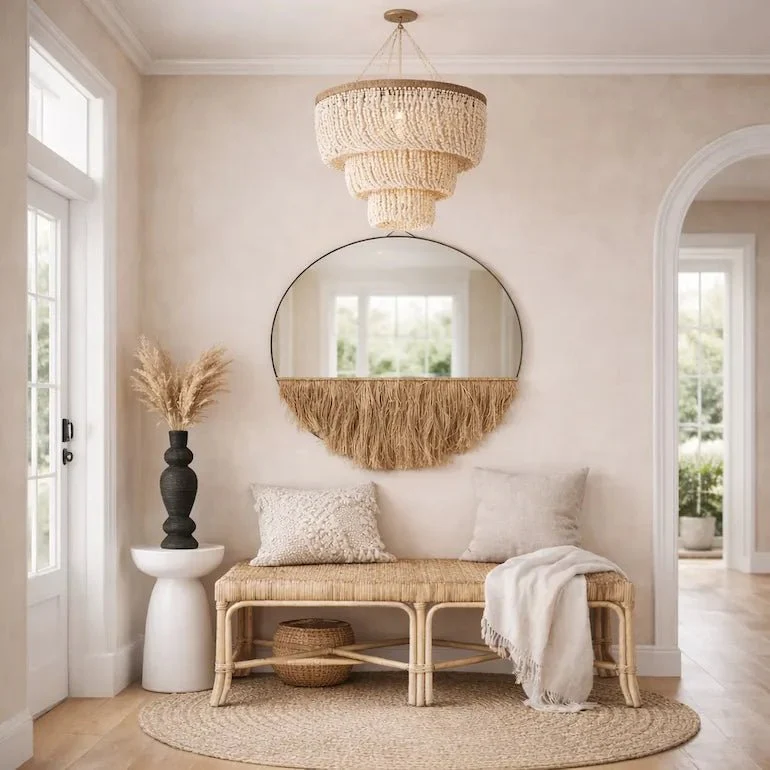
Cozy interior hallway with a round mirror featuring a rattan fringe detail, a woven bench with cushions, and warm bohemian decor creating a relaxed atmosphere.

Decorative small mirror with a handcrafted rattan frame shaped like organic loops, casting gentle shadows on a light wall in a boho-style setting.
Rattan Mirror Styling Guide: Boho Wall Mirror Ideas for Every Room
DUBAI, AL MANARA, UNITED ARAB EMIRATES, March 3, 2026 /EINPresswire.com/ -- Natural textures have become a defining feature of contemporary interior design. Wood, rattan, linen, and jute bring warmth that is often missing in urban apartments. Among the many ways to introduce organic materials into a room, a rattan mirror stands out as one of the simplest. It requires no renovation — just a wall and a sense of style.In bohemian home decor, rattan-framed mirrors have earned their place as essential accents. They add volume, texture, and character in a way that smooth metal or plastic frames cannot replicate. But choosing the right one involves more than aesthetics — size, placement, and surrounding decor all determine whether the mirror enhances the space or gets lost in it.
Why Rattan Works in Bohemian Spaces
Bohemian style relies on natural materials, layering, warm color palettes, and a sense of ease. There are no rigid lines or cold metallic sheens — instead, the focus is on soft shapes, handmade objects, and materials that feel alive. A rattan frame fits that narrative perfectly.
A rattan frame is more than a border for a reflective surface. The woven texture, slight irregularities, and organic color of the fiber create visual depth. Light and shadow play across the surface differently throughout the day, which gives the mirror a dynamic quality that flat, manufactured frames lack. Among various options on the market, pieces like the Lisette Mirror demonstrate how a woven frame can achieve a balance between artisanal character and refined design.
It is worth noting that rattan mirrors are not limited to purely bohemian interiors. They work well in Scandinavian rooms, Japandi aesthetics, coastal-themed spaces, and even modern classic settings. The material adds a layer of natural texture without overwhelming the existing style.
Rattan Wall Mirror vs. Other Decorative Mirrors
The category of decorative wall mirrors is broad — it includes frames made of metal, wood, plastic, stone, and textiles. What sets a rattan wall mirror apart is its visual weight. A metal frame, even a thin one, creates a sharp graphic outline. A wooden frame adds solidity. Rattan, however, is light and almost airy. The weaving creates an openwork effect that does not burden the wall but instead brings a sense of relaxation to the room.
For interiors with clean lines and neutral tones, a metal or geometric frame makes logical sense. But when the goal is to introduce softness, rattan does the job more effectively.
Choosing the Right Size
The size of a mirror affects proportion, visual balance, and the role it plays in the room. A small mirror on a large empty wall looks misplaced, while an oversized mirror in a compact space can feel overwhelming. Measuring the wall and the furniture below the mirror before purchasing helps avoid these common mistakes.
Small mirrors work best as part of a gallery wall. Combined with frames, posters, woven plates, and small shelves, a compact rattan mirror becomes a connecting element that adds depth through reflection. In small rooms — bathrooms, hallways, narrow corridors — it adds visual interest without overloading the wall.
Medium mirrors are the most versatile option. A medium-sized rattan wall mirror fits naturally above a console table, chest of drawers, or dressing table. It is large enough to be functional and decorative enough to set the tone for the surrounding area. Models like the Hawaii Mirror Medium show how the medium format can combine practicality with expressive character.
Large mirrors serve as statement pieces. Placed above a sofa, opposite a window, or behind a headboard, a large rattan mirror visually expands the space and multiplies natural light. The key is to give it room — avoid cluttering the surrounding wall with too many small items.
Where to Place a Rattan Mirror
Placement determines whether a mirror becomes a design accent or fades into the background. Hanging it opposite a window allows the mirror to reflect natural light and double its presence in the room — particularly useful in spaces with limited sunlight. Placing it above a sofa or console creates a classic composition that anchors the wall. In the hallway, a rattan mirror sets the tone for the entire home by conveying warmth from the first glance.
Transitional areas — hallways, stairwells, niches — are often overlooked, but a rattan mirror can turn these spaces into pleasant accents. In bohemian decor, there are no strict placement rules. A mirror can lean against a wall, rest on a shelf, or hang slightly off-center — this casual approach is part of what makes the style feel authentic.
Styling a Boho Mirror with Natural Textures
Context is what turns a mirror on a wall into a thought-out interior story. Pairing a rattan mirror with materials that share its natural language — wood, linen, ceramics, dried flowers — creates a cohesive look. If the mirror is large, one or two details nearby, such as a shelf or a planter, are usually enough.
Shape contrast is another useful technique: a round mirror next to rectangular furniture creates visual tension that keeps things interesting. Combining rattan with untreated wood can lead to texture overload — mixing rattan, ceramics, and textiles tends to produce a more balanced result.
Live plants complement rattan naturally. A hanging pothos or fern next to a mirror creates an atmosphere of organic warmth central to boho style. The main principle is balance: a rattan-framed mirror already carries significant visual weight, so surrounding elements should support it rather than compete.
Final Thoughts
A rattan mirror is not a trend that will disappear next season. It is a versatile design tool rooted in the appreciation for natural materials that drives much of contemporary interior design. Whether used in a bohemian, Scandinavian, or coastal setting, it introduces texture, warmth, and visual depth. The key lies in choosing the right size, finding a placement that maximizes its effect, and keeping the surrounding decor in balance.
Carol Sukkar
Home and Soul Furniture Trading LLC
+971 56 112 1444
email us here
Visit us on social media:
LinkedIn
Instagram
Facebook
X
Legal Disclaimer:
EIN Presswire provides this news content "as is" without warranty of any kind. We do not accept any responsibility or liability for the accuracy, content, images, videos, licenses, completeness, legality, or reliability of the information contained in this article. If you have any complaints or copyright issues related to this article, kindly contact the author above.
